



The 20-Week Anomaly Scan: What It Checks, What It Means
Somewhere near the halfway point of pregnancy, the room dims, the gel goes on, and a sonographer starts measuring parts of your baby you never knew could be measured. That appointment is the anomaly scan, and it usually takes longer than the scans before it. Most expectant parents arrive curious and leave with a much clearer picture. This guide covers what gets checked, how to read the wording in your report, and what happens if the team wants a second look.
What an Anomaly Scan Is, and Where It Fits in Prenatal Care
The anomaly scan is a detailed mid-pregnancy ultrasound that looks at how your baby’s body is forming. It is usually offered between 18 and 22 weeks, with 20 weeks as the common target, because the organs are developed enough to see clearly and there is still enough fluid around the baby for good views.
The scan is one piece of a bigger set of prenatal tests, not a stand-alone event. Tests across pregnancy help doctors find conditions such as hypertension, diabetes, and thyroid disorders early, and the scan adds a direct look at the baby. Many obstetrics departments group these checks under prenatal and postnatal care, and early detection of structural findings in the baby is a listed part of that care.
What the Sonographer Looks At
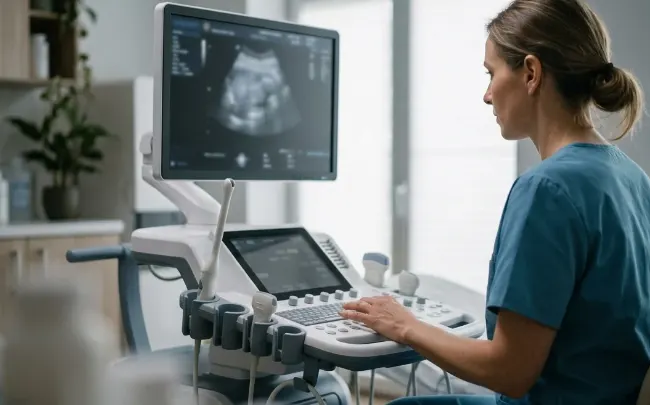
The sonographer works through your baby from head to toe, taking measurements and saving images along the way. Here is the usual route.
Head, Brain, and Face
The skull’s shape, the structures inside the brain, and the outline of the face and lips are viewed from several angles.
Spine and Heart
The spine is followed along its full length to confirm the bones and the skin over them look continuous. The heart gets the most time, since it is small and busy. Its four chambers and the large vessels leaving it are checked one at a time.
Abdomen, Kidneys, and Limbs
The stomach, bowel, kidneys, and bladder are located and measured. Arms, legs, hands, and feet are viewed too, along with how the baby is holding them.
Placenta, Fluid, and Growth
The placenta’s position, the amount of amniotic fluid, and the baby’s measurements are recorded and compared against expected growth for that week. A low-lying placenta is usually rechecked later, because it often moves upward as the womb grows.

What the Results Can Look Like
Reports tend to fall into one of three groups.
A Standard Result: Everything the sonographer needed to see was seen, and it matched what is expected at that stage. Many reports read this way, and the next step is your regular check-ups.
Incomplete Views: Sometimes the baby lies in a way that hides the heart or spine, or the images are hard to capture. A repeat scan at a later date is common, and it simply finishes the job.
A Finding that Needs a Closer Look: If the sonographer sees something that deserves another opinion, the usual route is a referral to a specialist in fetal medicine, sometimes with extra tests. A referral asks for more detail and is not a diagnosis. Departments that care for both normal and high-risk pregnancy shape the follow-up around what the scan found.
Prenatal care carries on after the scan. Later visits track fetal growth and the baby’s position, and some features only become clear in the third trimester, which is why the scan is one checkpoint among several.
Where 3D Sonar and Specialist Support Fit
Some obstetrics departments add 3D sonar, which builds surface pictures of the face and limbs. Families often enjoy those images, while the detailed organ check still rests on standard two-dimensional views. A department with a maternity unit, labor rooms, and a newborn intensive care unit can coordinate care from pregnancy through birth and the first days after, so plans can adjust if a scan finding calls for it.
Making the Appointment Easier
A few small habits help. Write your questions down beforehand, because the room tends to go quiet while the sonographer concentrates, and questions have a way of evaporating. That silence is normal. Ask for terms in plain words, ask what happens next before you leave, and ask for the full wording when the report uses abbreviations. Bring earlier scan reports and prenatal test results so everyone sees the same picture.
Final Thoughts
The 20-week scan gives a methodical look at your baby’s development. Most of what it tells you is practical: where things sit, how they are growing, and what your next check-ups should focus on. Take the report to your obstetrician as a starting point for questions, and keep asking until the wording makes sense. Expectant mothers in Muscat can talk through prenatal care, 3D sonar, and monitoring options with the obstetrics team at Al-Bushra Medical Speciality Complex. Which question will you bring to your next scan?
This article offers general information and does not replace advice from your own doctor or sonographer.
FAQ
Usually somewhere between 18 and 22 weeks, with 20 weeks being the common target. Your doctor picks the exact day from your dates. By then the baby is big enough to see clearly, and there’s still enough fluid around them for good views.
There’s no pain, just gel and gentle pressure from the probe. Expect it to run longer than your earlier scans, because the sonographer checks many structures one by one. Plan for a relaxed slot instead of a quick stop on your way somewhere else.
Another visit gets booked, and that’s common. A baby curled the wrong way can hide the heart or spine for a while. A second look at a later date usually gives the clear views needed to finish the check.
Not quite. 3D sonar builds surface pictures of the face and limbs, while the detailed organ check relies on standard images. Some obstetrics departments offer both, and your doctor can tell you which one your pregnancy actually needs.
