


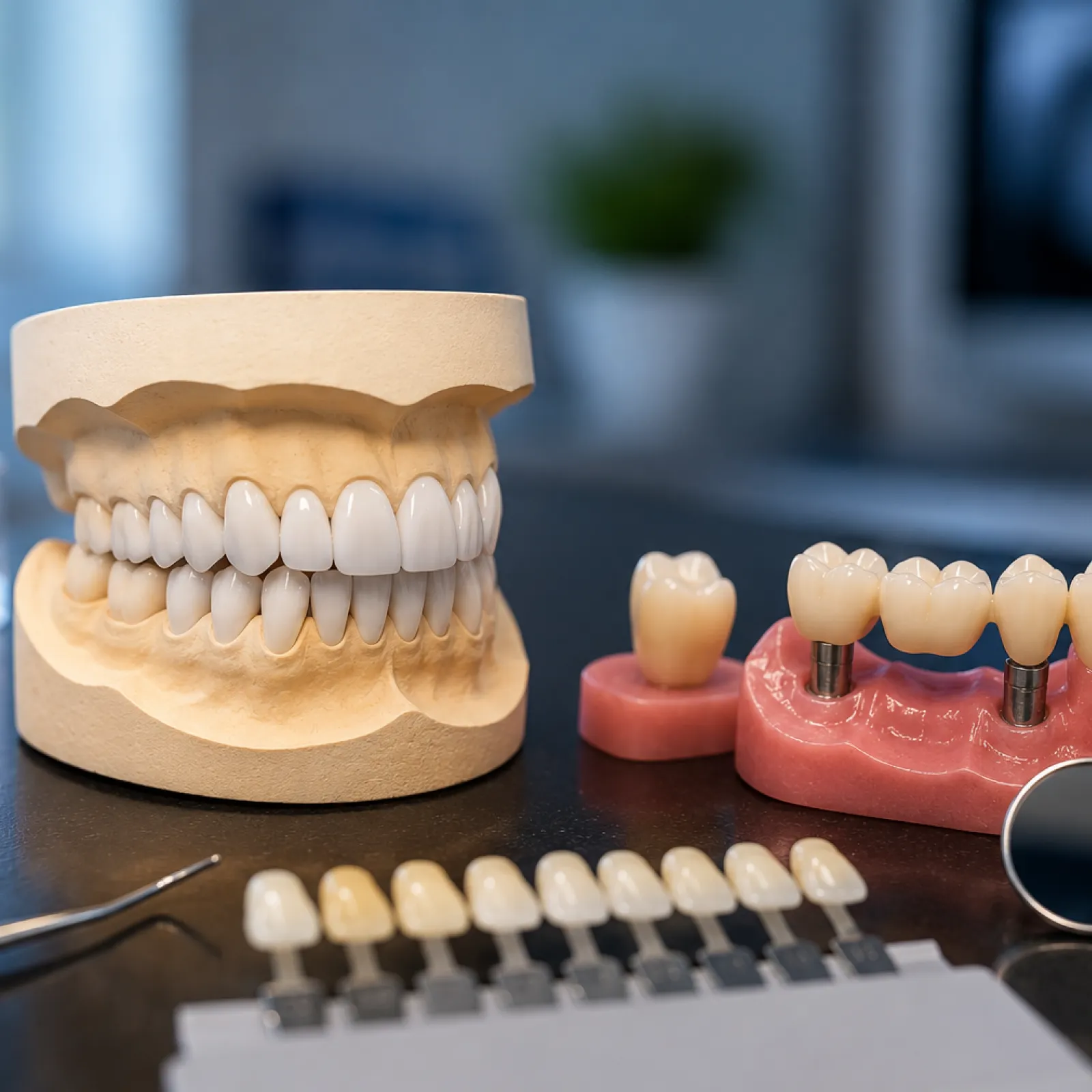
Fixed Prosthodontics: When Is It the Right Call?
A cracked tooth that hurts when you chew. A gap where a tooth used to be. Maybe a molar that got so hollowed out by decay that the filling keeps falling out. These are the moments when a dentist stops talking about patches and starts talking about fixed prosthodontics. Most people have heard the word without really knowing what it covers or whether it applies to their situation.
So here is a plain-language look at what it involves, when it becomes the right path, and what shapes the decision.
What Does Fixed Prosthodontics Actually Mean?
Fixed prosthodontics covers the permanent restoration or replacement of teeth. The word “fixed” is the key part. Whatever goes in stays in. The patient does not remove it at night or soak it in a glass. It functions as part of the mouth from the moment it is placed.
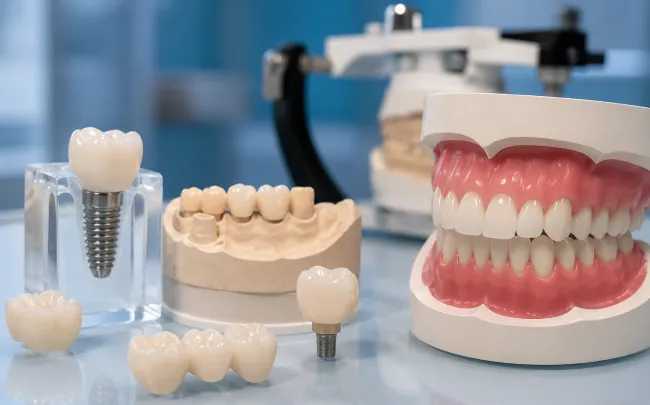
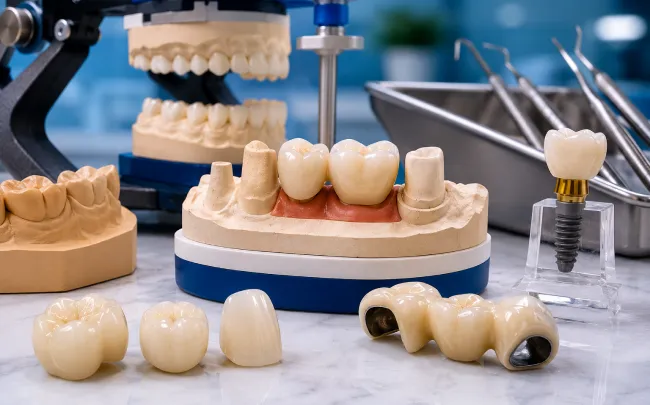
The most familiar forms are crowns and bridges. A crown fits over a single damaged tooth. A bridge fills the space left by a missing tooth, supported by the teeth sitting on either side of the gap. Both are cemented into position and designed to work the way a natural tooth does during chewing, speaking, and basic day-to-day function.
There are situations where neither is appropriate and cases where one is clearly better than the other. That decision belongs to a clinical assessment, not a checklist.
When Does a Dental Crown Enter the Picture?
A crown is not just something placed on teeth that look bad. The cases that actually need one tend to involve structural failure rather than cosmetic concerns.
After a root canal, the treated tooth loses its internal support and becomes brittle over time. A crown placed on top protects what remains. Similarly, when decay has eaten through so much of the tooth that a filling would not have enough solid structure to grip, a crown becomes the better solution. Cracked teeth that have not yet fractured fully can sometimes be saved this way too, wrapping the remaining structure before the crack extends to the root.
The dentist is essentially asking one question in all these cases: are there enough healthy teeth left to build on? If there is, saving that root is usually worth it. Roots preserve bone. An extracted tooth leaves a gap that the jawbone underneath gradually shrinks to fill, which is a problem that creates more problems.
When Does a Dental Bridge Become a Conversation?
Once a tooth is gone, the mouth does not simply adjust and move on. The teeth beside the gap start drifting. The tooth above or below the space begins to shift downward or upward into the empty area. None of this happens overnight, but the cumulative effect on bite alignment and jaw comfort is real.
A dental bridge interrupts that process. It replaces the missing tooth and holds the neighboring teeth in place at the same time. The anchor teeth, called abutments, are prepared by the dentist and fitted with crowns that support the false tooth suspended between them.
This works well when the adjacent teeth are structurally sound. If they are heavily decayed or compromised themselves, the bridge design has to account for that, or an alternative route needs to be considered. The dentist will look at bone support and gum health around those anchor teeth before committing to the plan.
What the Assessment Involves?
Patients often want to know upfront whether they qualify for a crown or a bridge. The honest answer is that nobody can tell them that without looking at X-rays and examining the tooth and surrounding tissue directly.
X-rays show what is happening below the gumline. Root health, bone density, and any infection that is not visible on the surface all appear on imaging. Gum condition matters just as much. Prosthodontic work placed over inflamed or infected gum tissue does not hold the way it should and creates a base for further problems.
At Al-Bushra Medical Specialty Complex in Muscat, the dental team conducts these assessments before any fixed prosthodontic treatment is planned. No restoration gets placed without that clinical picture first.
How Long Do These Restorations Last?
Longevity varies, and anybody who gives a single definitive number is oversimplifying. Materials play a role. Full-zirconia crowns handle heavy bite forces differently than porcelain-fused-to-metal. Where the crown sits in the mouth matters too. Back teeth take more pressure than front teeth.
What patients control is maintenance. Brushing around the crown margins, flossing carefully near a bridge, and keeping regular checkup appointments are the habits that determine whether a restoration lasts a decade or considerably longer. Small issues caught early at a checkup, like a tiny gap forming at the crown edge, are straightforward to address. Ignored, they become a much bigger conversation.
Cases Where Fixed Prosthodontics Treatment Is Not the Immediate Answer
There are situations where the dentist will delay or redirect the plan. Active gum disease needs to be treated and stable before any restorative work starts. Bone loss around the target area may affect how well the work holds long-term. Patients managing certain systemic conditions or taking medications that slow healing need a fuller review before any procedure.
This is not a small point. A crown or bridge placed on an unhealthy foundation creates a cycle of failures that costs more to fix each time. Sequencing matters.
Final Thoughts
Fixed prosthodontics treatment, whether that means a crown protecting a damaged tooth or a bridge replacing a missing one, tends to become the right option when the damage has moved beyond what simpler treatments can address. The starting point is always a proper examination, not a self-assessment based on how the tooth looks or feels.
FAQ
It is the part of dentistry that handles permanent tooth restoration. Crowns, bridges, that kind of thing. Once it is in, it stays in. You do not remove it. It is designed to work like your original tooth did, or close to it.
A crown is for a tooth that is still there but too damaged to survive without covering it. A bridge is for when the tooth is already gone. X-rays and a physical exam tell the dentist which route applies. There is no universal answer without looking at what is actually in the mouth.
The work is done with local anesthesia, so during the procedure itself, most patients feel pressure rather than pain. Some sensitivity for a few days afterward is fairly common. It tends to settle down on its own.
With decent maintenance, many years. Some last well over a decade. Material choice, bite habits, and how well the patient looks after them are the main factors. Regular checkups catch minor issues before they shorten the lifespan.
Bleeding gums usually point to gum disease, which needs to be assessed and treated before any prosthodontic work begins. Placing a crown over unhealthy gums causes more problems than it solves. A dentist will sequence the treatment properly so the base is solid before anything is placed.
