


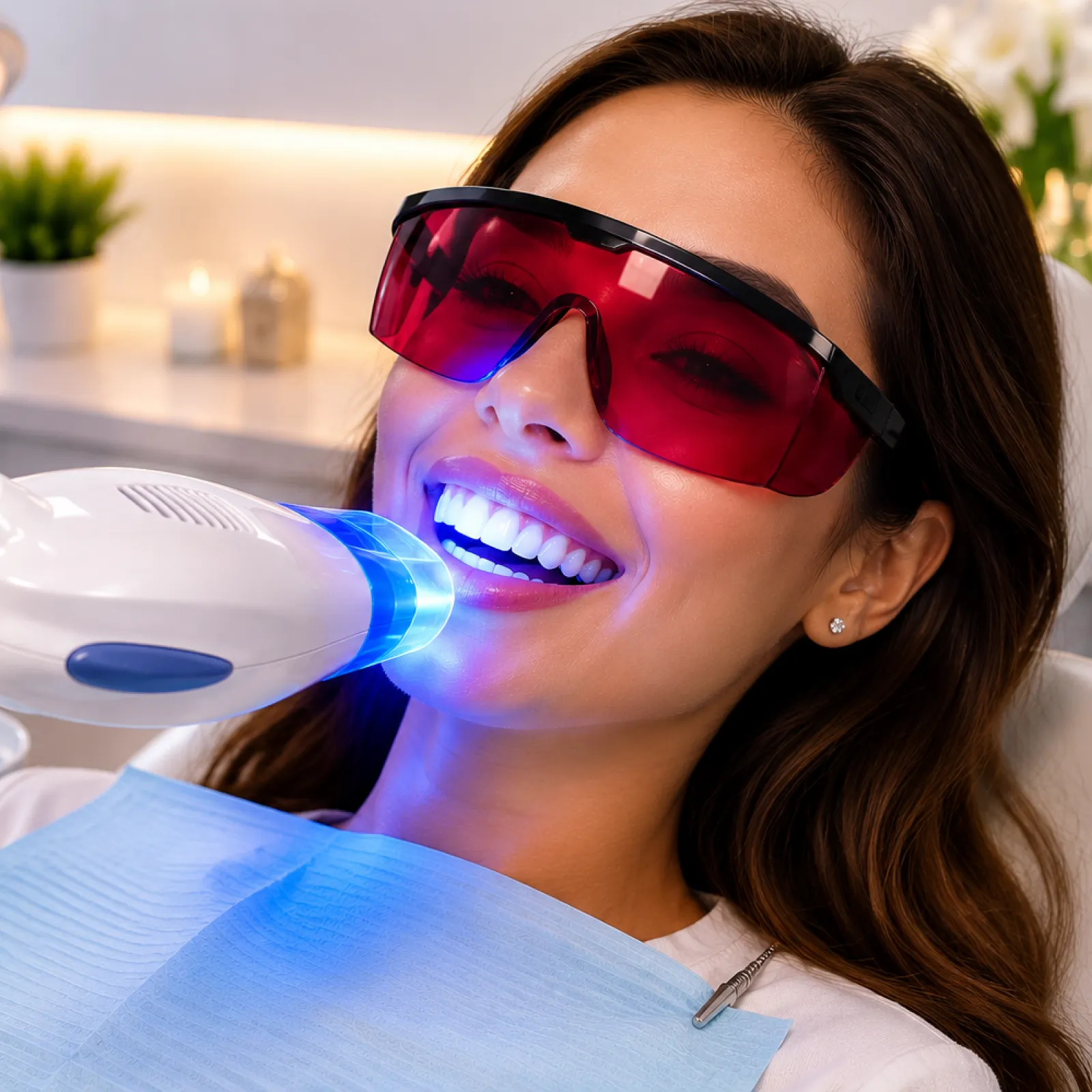
How Long Does Teeth Whitening Last? A Muscat Clinic Explains
Most people ask this question after they’ve already paid for the treatment. That’s a bit backwards. Knowing what to expect before you sit in the chair makes the whole experience less of a guessing game and far more worth it. So let’s get straight to it. How long does teeth whitening last? The real answer depends on more variables than most clinics bother explaining upfront.
How Long Does Teeth Whitening Last: What Does Actually Determine It?
Professional teeth whitening done inside a clinic typically keeps your teeth noticeably brighter for somewhere between six months and two to three years. That’s a wide range and not accidental. Results differ that much from person to person because the teeth themselves differ that much.
Three things drive most of the variation. First is the treatment type. In-chair professional whitening at a dental clinic uses a higher-strength whitening agent applied under clinical supervision. It reaches deeper into the enamel. Take-home trays prescribed by a dentist work more gradually and generally hold results for six to twelve months with proper use. Store-bought strips and whitening toothpastes sit at the lower end of the spectrum because the active concentration is significantly weaker.
Second is enamel porosity. Some people’s enamel is naturally more porous than others. More porous enamel absorbs staining compounds faster. It’s not something you can control, but it does affect how quickly your results fade after treatment.
Third is what goes into your mouth day to day. More on that shortly.
The Foods and Habits That Eat Into Your Results Fastest
Coffee is the main one. Then black tea, red wine, cola drinks, and tomato-based sauces. All of these leave pigment deposits on enamel over time. For people in Oman and across the Gulf, strong karak chai and dark filter coffee are the primary culprits worth keeping an eye on.
Tobacco accelerates staining faster than any food. Smoking after whitening can reverse results visibly within weeks.
The 48 to 72 hours immediately after treatment deserve special attention. During that window, the enamel pores are open and unusually receptive to pigment. Sticking to lighter-coloured foods and drinks right after your appointment is not excessive caution. It genuinely changes how long the brightness holds.
After that initial window, using a straw for coffee or cold drinks reduces how much liquid contacts the front surfaces of your teeth. Small habit. Noticeable difference over months.
Professional Whitening vs. At-Home Kits: Worth the Difference?
Yes, and the gap matters more than most people think. Clinical whitening at a specialist dental centre like Al Bushra Medical Specialty Complex in Muscat involves a dentist assessing your teeth first. That matters. Existing gum issues, enamel thinning, or untreated cavities can all affect both results and safety. A dentist catches those before starting treatment. A strip from a pharmacy does not.
Al Bushra’s dental department in Muscat offers teeth whitening as part of a broader cosmetic dentistry service line that includes Hollywood Smile treatments, aesthetic fillings, and scaling and polishing. Scaling and polishing before whitening actually makes a practical difference. Removing surface deposits first gives the whitening agent direct contact with cleaner enamel. The results tend to be more even and more lasting.
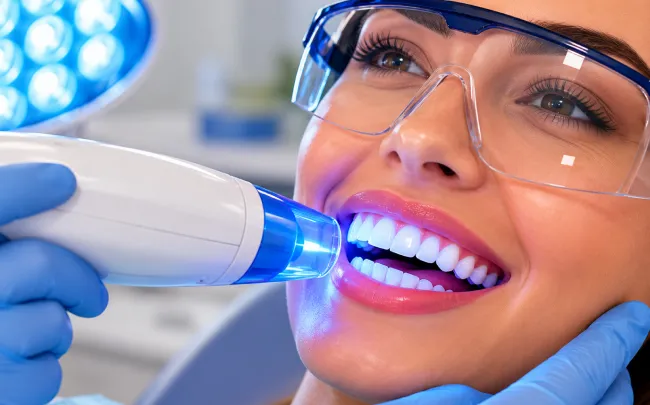
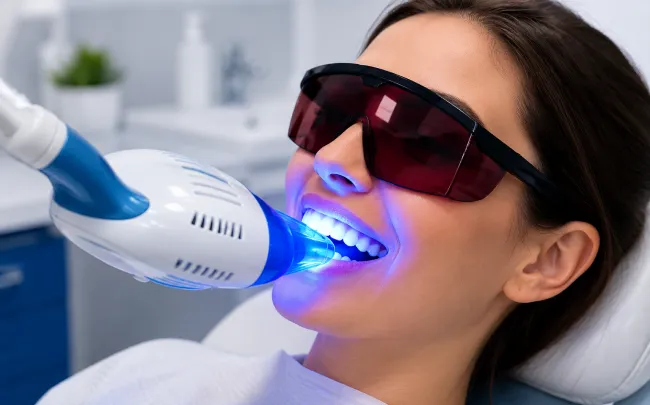
How to Keep Your Teeth Whiter for Longer
The aftercare is where most people lose their results.
Brush twice daily. Use a soft-bristled toothbrush. Hard bristles gradually wear down enamel, which, over time, makes teeth more prone to picking up surface stains. Floss once a day. Plaque accumulation around the gumline accelerates discolouration even if the teeth themselves feel clean.
Schedule a professional scaling and polishing every six months. This removes the light build-up of surface staining before it sets in. At Al Bushra, the dental team handles both preventive care and cosmetic treatments under the same roof, which makes it straightforward to combine a cleaning visit with a follow-up whitening check-in.
If your dentist provided a custom tray after your in-clinic session, use it for periodic touch-ups. Even a brief application every couple of months noticeably extends the life of the original result.
Who Should Not Whiten Their Teeth (Read This Before Booking)
Whitening is not appropriate for everyone, and this is where YMYL information matters. If you have active gum disease, exposed root surfaces, untreated tooth decay, or significant enamel erosion, these need to be addressed first. Applying whitening agents over these conditions can worsen sensitivity and cause damage.
Pregnant or breastfeeding women are generally advised to wait. Not because harm has been confirmed, but because the available data during those stages is insufficient to rule it out.
One more thing worth knowing: whitening agents only work on natural tooth enamel. Crowns, veneers, and composite fillings do not respond to the treatment. If you have visible restorations, speak with your dentist about how to manage expectations for overall results before committing to a whitening treatment.
Final Thoughts
Teeth whitening is not a one-and-done procedure. How long does teeth whitening last? The results last come down to the treatment quality, your diet, your brushing habits, and how consistently you follow through with maintenance. Professional treatment done inside a clinic, combined with basic aftercare, is where most people see results that actually hold.
If you’re considering whitening in Muscat, start with a proper dental assessment. It tells you whether you’re a good candidate, what to expect from results, and what your maintenance plan should look like.
What’s one habit you could change today to make your whitening results last longer?
FAQ
Anywhere from six months to about three years, depending on how porous your enamel is and what your diet looks like day to day. In-clinic professional whitening holds longer than take-home kits, which hold longer than over-the-counter strips. Maintenance habits make the biggest difference in where you land on that range.
Yes. Coffee, black tea, and dark sodas are the main drivers of post-whitening discolouration. The first 72 hours after treatment are the most vulnerable because enamel pores are more open than usual. What you consume during that window affects results more than any other single factor.
For most adults with healthy teeth and gums, yes. The important step is having a dentist assess your teeth beforehand. If you have gum disease, thinning enamel, or untreated cavities, those need to be treated first. Whitening over existing dental problems can increase sensitivity and cause damage.
Whitening agents don’t work on crowns, veneers, or composite fillings. Natural enamel will lighten, but restorations stay the same shade. If you have visible dental work in your front teeth, talk to your dentist first. They can advise you on managing colour consistency.
Most dentists suggest waiting at least six months between full whitening sessions. Doing it more frequently can weaken enamel over time and increase tooth sensitivity. Small touch-up applications using a custom tray are a smarter way to maintain brightness without overdoing it.
