


Hard Water Skin Rash: When to See a Dermatologist in Muscat
An itchy red patch that shows up after a shower gets blamed on the water almost every time. A hard water skin rash is the popular guess, so people swap soaps, add a filter, and wait. The idea is not baseless, but the science is more mixed than most online advice admits. This guide explains what hard water may do to skin, how to spot a pattern tied to your bathroom routine, and when a dermatologist in Muscat is the better next step. It is general education and cannot replace an examination.
What Does Hard Water May Do to the Skin Barrier?
Water counts as hard when it carries high levels of dissolved calcium and magnesium. Those minerals make soap and shampoo harder to rinse away, so a thin residue can linger on skin and scalp. Researchers from Sheffield and King’s College London went further. They reported that the minerals, detergents, and filaggrin, a protein that helps build the skin barrier, interact in a way that weakens the barrier and raises sensitivity to everyday wash products. Hard water can also push the skin surface pH upward, while healthy skin is normally acidic.
The effect is not equal across people. Those who already had eczema reacted more strongly than people with healthy skin, and variants in the filaggrin gene seem to matter. Small adult studies also suggest lower skin hydration after exposure.
How a Hard Water Skin Rash Tends to Show Up
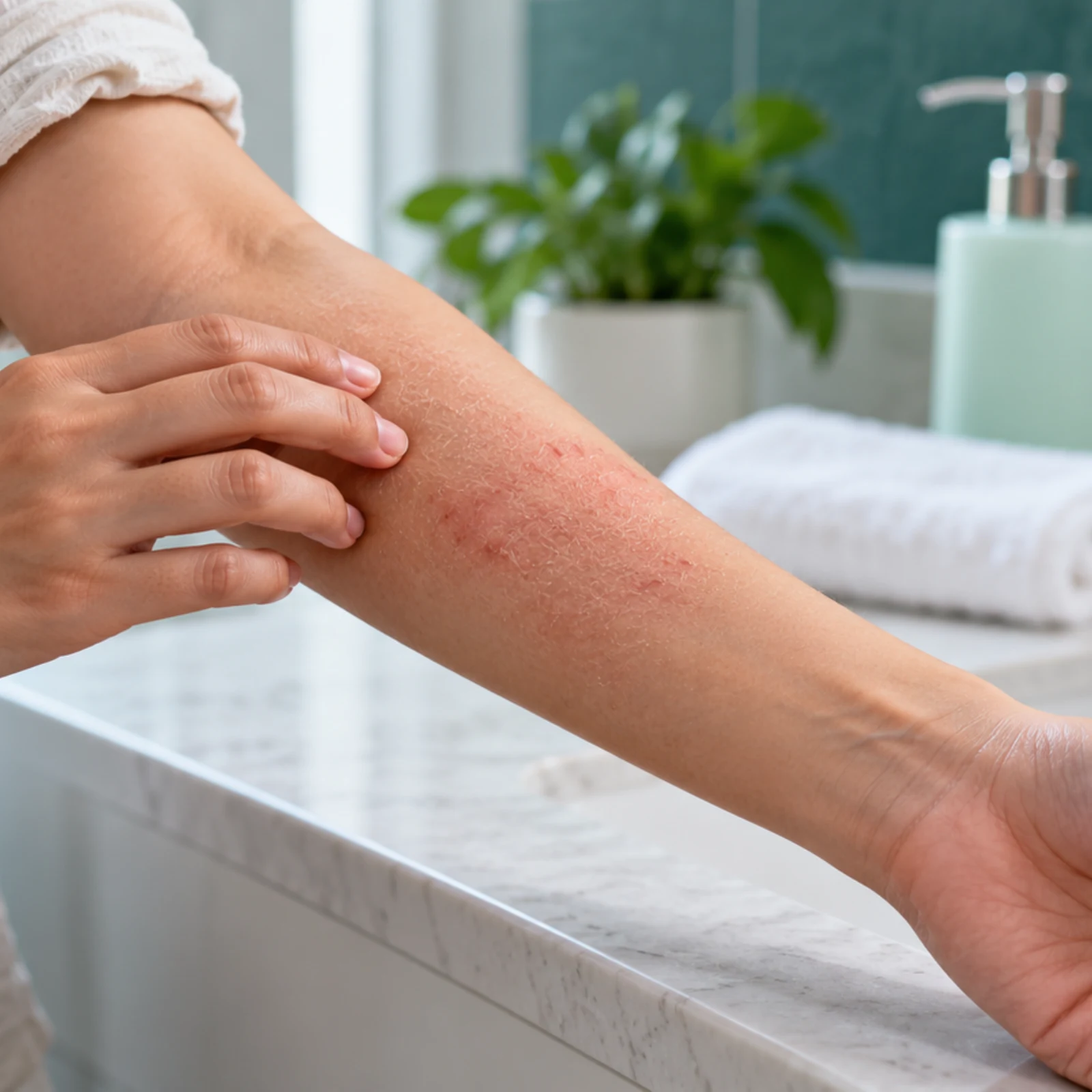
Dry, itchy, and irritated skin is the usual complaint. The look of the patch tells you little. The pattern tells you more. Note whether symptoms began after a move, a new building, or a change to your shower setup, and whether they ease when you are away from home. One dermatology nurse practitioner says hair and skin feeling better on holiday can point toward the water, and that a diary of flare-ups and routine changes helps narrow down the cause.


The Evidence Is Not as Settled as It Sounds
Oman adds a local twist. Desalination makes an important contribution to the country’s water, and the Al Ghubrah plant is one of the sources serving Muscat. Hardness still varies by supply, so ask your water provider or test your own tap rather than assuming.
Gentle Steps Worth Trying First
Dermatologists often suggest mild, unscented cleansers and moisturizers and drying by patting rather than rubbing. Shorter showers help too. One UK dermatologist suggests about five minutes, warm rather than hot water, and rinsing products off thoroughly. If skin is dry or sensitive, frequent exfoliation can add to the irritation. Some research suggests a water softener may ease eczema symptoms, though results are mixed.
When to See a Dermatologist in Muscat
A suspected hard water skin rash deserves a professional look once it outlasts a simplified routine, keeps returning, or has not improved with basic drugstore products. Stubborn eczema or psoriasis belong in the same group. Guessing is risky because a red spot that looks like an allergy can turn out to be an infection, and some rashes point to a hormonal issue that no filter would touch. Sudden or severe symptoms call for urgent medical care rather than a routine booking.
At the visit, expect questions about your medical history, hydration, and sun exposure, followed by a close look at the skin and sometimes a few tests. Your shower diary, your cleansers, and the date symptoms began give the dermatologist something concrete to work with.
Final Thoughts
Hard water may explain part of a rash, all of it, or none of it, and the evidence does not allow a confident verdict from the tap alone. A diary of showers, products, and flare-ups gets you further than any online claim. Al-Bushra Medical Specialty Complex in Oman runs dermatology consultations Sunday to Thursday from 9 AM to 5 PM and on Saturday from 9 AM to 1 PM. [Internal Link: contact details and opening hours] If your skin settles every time you travel, what is your bathroom routine trying to tell you?
FAQ
Nobody has proven it yet. Studies tie hard water to more eczema in small children and worse symptoms in people who already have it, but none has shown it causes a rash by itself. Your soap, how long you stand under the shower, and your own skin type can weigh just as much as the tap.
Look at the pattern. Dry, itchy skin that starts after a move or eases when you travel is a clue. Keep a diary of flare-ups and routine changes, because causes are hard to pin down alone.
Maybe a little. Some research suggests softeners may ease eczema symptoms, but a trial found only a modest overall benefit. Gentler cleansers, shorter showers, and daily moisturizer are cheaper places to start.
Once the rash outlasts a simpler routine or keeps coming back. A red spot can look like an allergy and be an infection, so guessing is risky. Sudden or severe symptoms need urgent care, not a routine slot.
