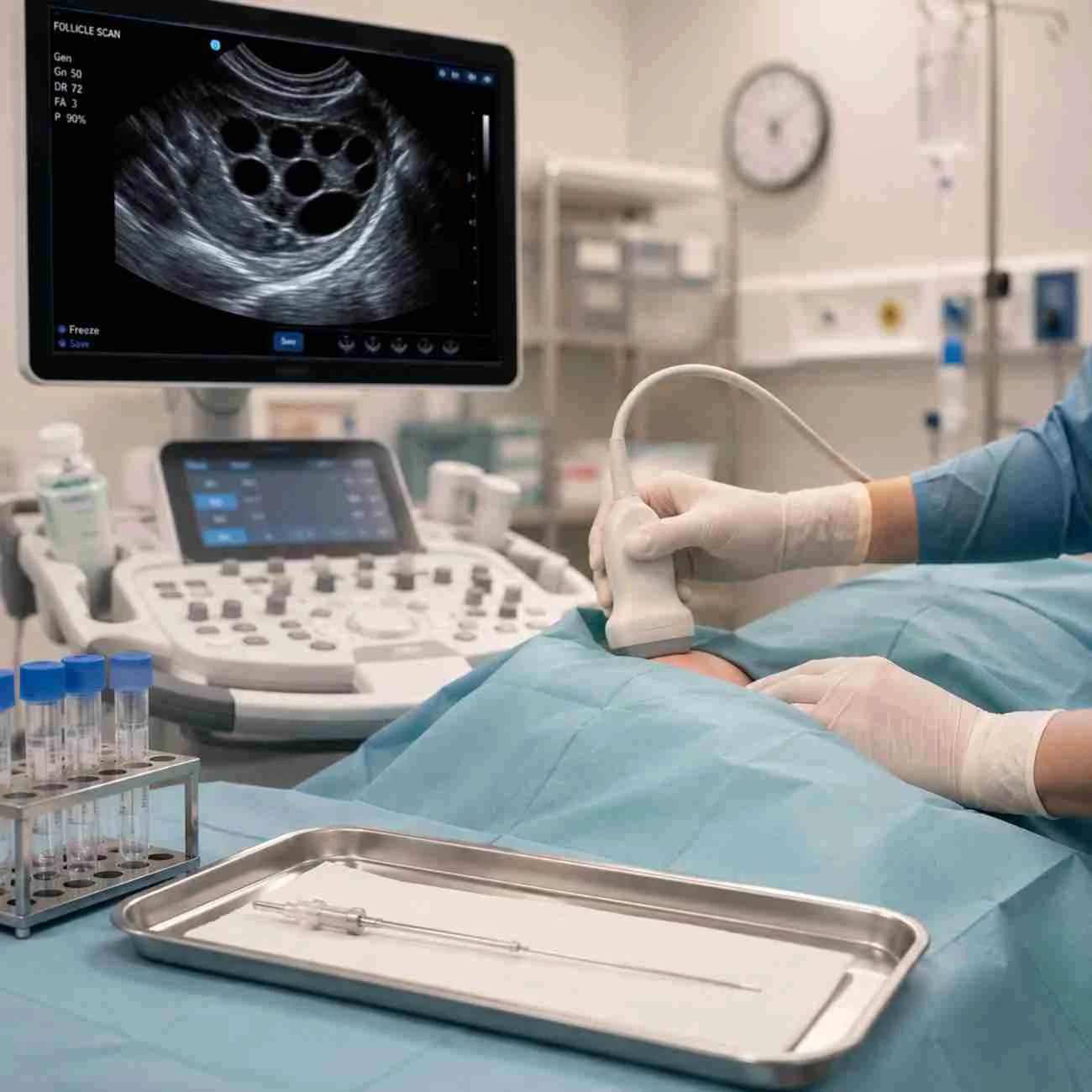
Modern fertility clinic procedure room showing an ultrasound screen with follicle scan imagery, gloved hands operating an ultrasound probe, and a sterile tray with medical instruments in the foreground.

Egg Retrieval in IVF: What Happens and What to Expect
Egg retrieval is the step in an IVF cycle where the ovaries finally hand over what weeks of injections were building toward. It happens under sedation, takes roughly twenty minutes, and marks the point where treatment shifts from your body to the laboratory. For most people going through IVF at a clinic like Al-Bushra Medical Specialty Complex in Muscat, this is the stage they think about most and worry about most too.

What Happens During the Egg Retrieval Procedure

The egg retrieval procedure follows a stretch of ovarian stimulation, where hormone medications encourage the ovaries to develop multiple mature eggs instead of the single egg a natural cycle produces. Once monitoring shows the follicles are ready, a doctor uses a fine needle, guided by ultrasound, to draw fluid and eggs directly from the ovaries. The ASRM patient guide on egg retrieval technique describes this as one of the more established steps in assisted reproduction, and clinics have refined the timing and sedation approach over decades.

Sedation or light anesthesia is standard, so the retrieval itself is not something patients typically feel happening. What follows is usually mild cramping, similar to a heavy period, rather than sharp pain. The eggs collected go straight to the lab, where they’re fertilized either through conventional IVF or ICSI, depending on the sperm quality involved.

Preparing for Ovarian Stimulation and Retrieval Day

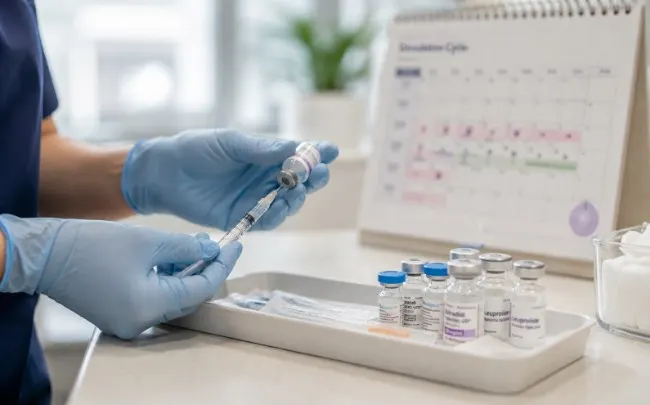
Ten to twelve days of injections come first. Blood draws and ultrasounds happen every few days through that stretch, tracking how many follicles are growing and whether the medication dose needs adjusting along the way. Then comes the trigger shot. It’s timed to the hour, usually given thirty-six hours before retrieval, because getting that window wrong lets the eggs release on their own before the doctor can reach them. That’s why clinics are strict about the exact time it goes in, down to the minute in some protocols.

Clinics generally aim for a specific number of mature eggs rather than the highest possible count. Ovarian stimulation covers how monitoring adjusts medication doses through the cycle. The retrieval day itself is short. Patients arrive fasting, are sedated for the procedure, and rest for a short recovery window before heading home the same day. Someone else should do the driving.

Close-up of gloved healthcare professional hands preparing a hormone injection with a syringe and medication vial on a clinical tray, with a treatment tracking calendar softly blurred in the background.
Peaceful fertility clinic recovery room with a reclining medical chair, soft blanket and pillow, glass of water, light snack, and gentle natural light filtering through sheer curtains.

What Egg Retrieval Recovery Feels Like

Egg retrieval recovery varies by person, but bloating, mild cramping, and fatigue for a day or two are the most common experiences. Some notice spotting. A smaller number develop symptoms of ovarian hyperstimulation, which is why clinics ask patients to report unusual swelling, nausea, or rapid weight gain rather than waiting it out.

Rest matters more than people expect on the first day. After that, most return to light activity within forty-eight hours, though anything strenuous is usually paused until the ovaries settle back to their normal size. The embryo transfer, if it happens in the same cycle, is scheduled days later once the lab confirms fertilization and development.

Costs and What's Included

IVF treatment cost in Muscat generally runs between 1,300 and 1,900 OMR, and this typically covers the core cycle: consultations, hormone bloodwork, medications, egg retrieval, and embryo transfer. Genetic testing and embryo freezing tend to sit outside that base figure as separate line items. A good clinic will walk through what’s included before treatment starts rather than leaving it vague until the invoice arrives.

Success with IVF depends on more than the retrieval alone. Egg quality, sperm health, and the underlying cause of infertility all play a role, and a specialist typically wants at least eight to ten mature eggs retrieved to give a cycle a solid chance. Fewer eggs doesn’t rule out success, but it does change how the lab approaches fertilization and embryo selection.

Final Thoughts

Egg retrieval is a single day inside a much longer process, but it’s often the moment that feels most concrete after weeks of injections and scans. Knowing what the procedure actually involves and what recovery typically looks like tends to ease a lot of the anxiety around it. If you’re weighing your options or want a clearer picture of what a cycle would involve for your specific situation, a consultation with a fertility specialist is the most useful next step.

FAQ

Not during the procedure itself, since you’re sedated. Afterward, expect cramping similar to period pain for a day or so. Most people describe it as manageable, not dramatic.

Somewhere around eight to ten mature eggs gives a cycle a reasonable shot. Fewer isn’t a dead end, but the lab has less to work with for fertilization and embryo choice.

No. You’ll be sedated, so you need someone else behind the wheel. Plan for a quiet rest of the day too.

Usually a few days later, once the embryology team confirms how the fertilized eggs are developing. Some cycles freeze everything and transfer in a later month instead.

Consultations, bloodwork, medications, the retrieval, and the transfer are typically bundled in. Extras like genetic testing or freezing embryos for later usually cost separately, so it’s worth asking upfront.

Start typing and press Enter to search

إتصل لحجز موعد