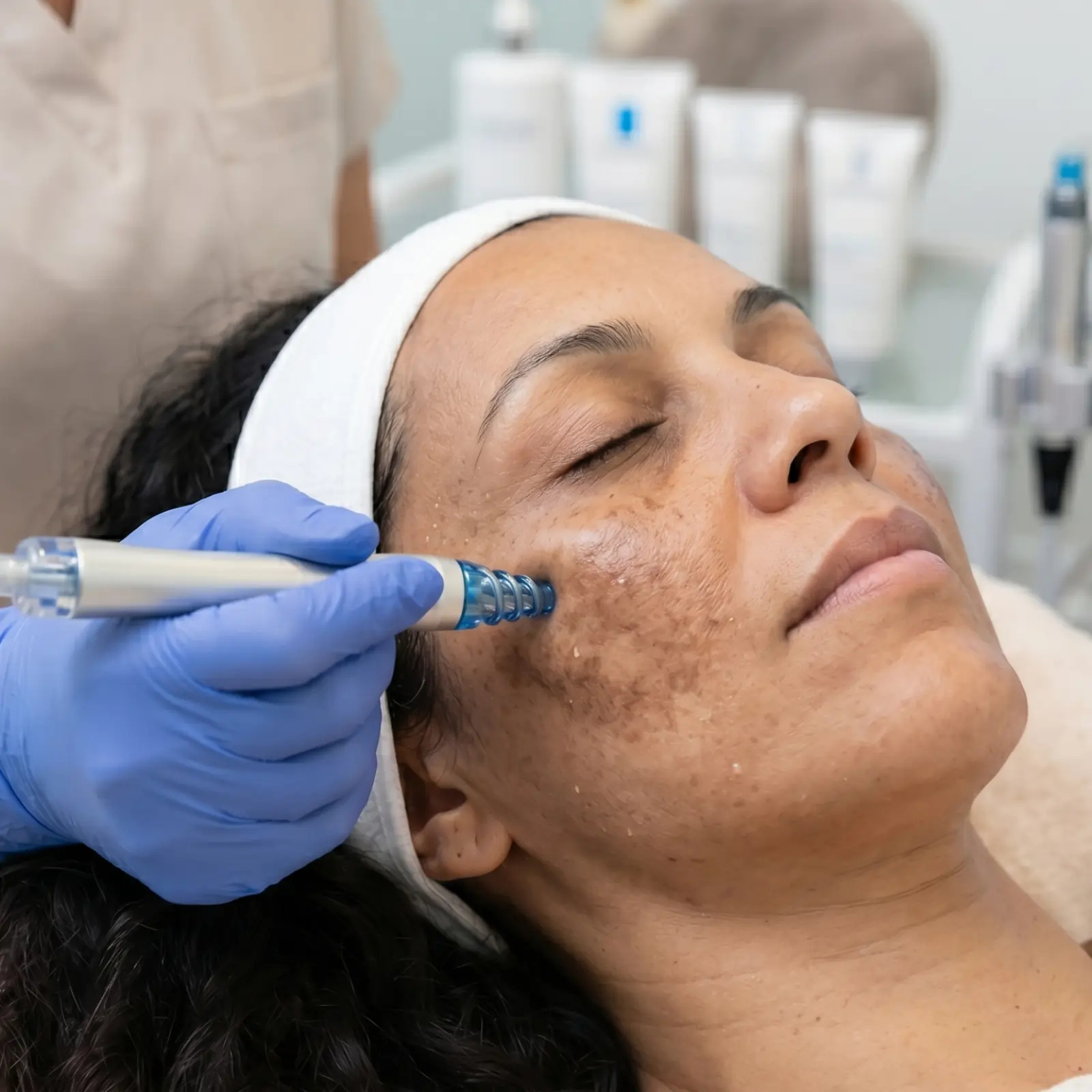
Hyperpigmentation in Pregnancy: What’s Normal?
Your body changes a lot during pregnancy. Some changes you expect. Others catch you off guard, like waking up one morning and noticing dark patches spreading across your cheeks, forehead, or belly. That is hyperpigmentation, and it is one of the most common skin changes in pregnancy.
The good news? It is not dangerous. But it can be unsettling, especially when you do not know what is causing it or what you are actually allowed to use on your skin while pregnant.
Here is a clear, honest breakdown of why it happens, what is safe, and what you can do about it.
Why Does Hyperpigmentation Happen During Pregnancy?
During pregnancy, your body produces significantly higher levels of estrogen and progesterone. These hormones directly stimulate melanocytes, the cells in your skin responsible for producing pigment. When melanocytes get overstimulated, they produce more melanin than usual, and that excess melanin shows up as darker patches on your skin.
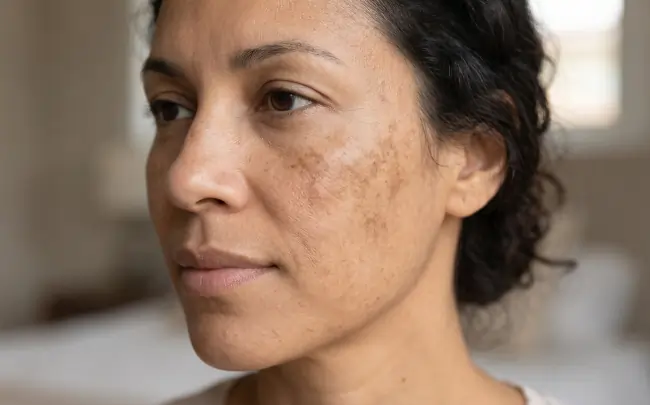
This process has a name. When dark patches appear specifically on the face, including the cheeks, nose bridge, upper lip, and forehead, dermatologists call it melasma in pregnancy, sometimes referred to as the “mask of pregnancy.” It affects a significant number of pregnant women globally, with sun exposure making it noticeably worse.
Beyond the face, you may also notice:
Darkening along the inner thighs, underarms, and neck. This is called acanthosis and relates to how skin folds respond to hormonal shifts.
A dark vertical line running down your belly is called linea nigra. This is almost universal in pregnancy and completely harmless.
Darkening of the nipples and areolas, which is also extremely common.
Sun exposure is the biggest external trigger. UV rays accelerate melanin production in skin that is already hormonally sensitized. If you are spending time outdoors in Oman’s intense sun without protection, patches can deepen quickly.
Is Pregnancy Hyperpigmentation Permanent?
For most women, no. The majority of skin darkening during pregnancy fades on its own within a few months after delivery, once hormone levels normalize. Melasma specifically can be more stubborn and may take longer to resolve, particularly if it was severe or went unmanaged during pregnancy.
Some women find that certain patches persist, especially if there was repeated sun exposure throughout pregnancy. That is why prevention during pregnancy matters just as much as treatment after delivery.
What Skincare Ingredients Are Safe During Pregnancy?
This is where people get confused, and rightly so. Many of the ingredients commonly used to treat hyperpigmentation, like hydroquinone, retinoids, and high-dose salicylic acid, are not considered safe during pregnancy.
Here is what dermatologists generally consider low-risk for pregnancy-safe skincare:
Vitamin C (ascorbic acid) works as an antioxidant and gently inhibits melanin production. It is one of the more widely used options during pregnancy for brightening uneven skin tone.
Niacinamide helps reduce the transfer of melanin to skin cells and is generally well tolerated. It also supports the skin barrier, which tends to become more reactive during pregnancy.
Azelaic acid is available by prescription in higher strengths and is one of the few pigmentation treatments that most dermatologists consider appropriate during pregnancy. It slows down overactive melanocytes without the risks associated with other agents.
Broad-spectrum SPF 30 or higher sunscreen is honestly the most important step. Daily, consistent sun protection significantly limits how dark patches become and prevents new ones from forming.
Always confirm any new skincare product with your OB-GYN or a dermatologist before using it. What suits someone else’s skin during pregnancy may not suit yours.
How Dermatologists Approach Hyperpigmentation in Pregnant Patients
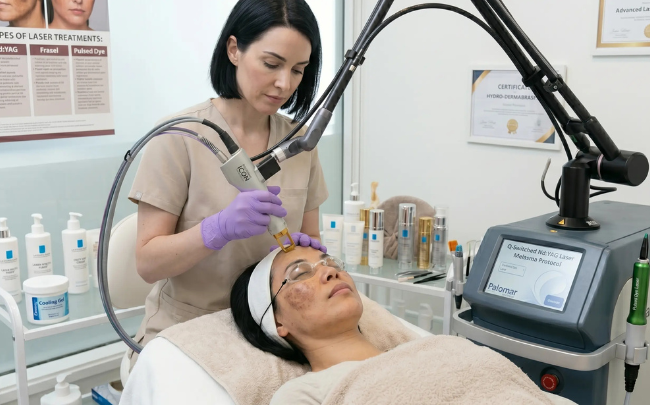
A dermatologist’s role during pregnancy is not just to recommend a cream. It involves assessing what type of pigmentation you are dealing with, how severe it is, and what the safest management pathway looks like at your stage of pregnancy.
At Al Bushra Medical Specialty Complex in Muscat, the dermatology team evaluates each patient individually, including pregnant women presenting with pigmentation and melasma concerns, and works in coordination with the obstetrics department to make sure any approach is appropriate for both mother and baby.
Post-delivery, options widen considerably. Treatments like chemical peels, prescription azelaic acid at higher concentrations, and topical retinoids can then be considered depending on whether you are breastfeeding and how your skin has responded.
Practical Prevention Steps That Actually Work
You cannot fully prevent hyperpigmentation in pregnancy because the hormonal trigger is internal. But you can absolutely limit how visible it becomes.
Apply sunscreen every single morning, even indoors near windows, because UV light penetrates glass. Use a physical sunscreen with zinc oxide or titanium dioxide if your skin is sensitive.
Wear a wide-brimmed hat when outdoors, especially between 10am and 3pm when UV intensity peaks in Oman.
Avoid waxing or harsh exfoliation on areas already showing pigmentation. Skin inflammation can worsen existing dark patches.
Use gentle, fragrance-free cleansers. Pregnancy skin can be more reactive, and irritation tends to trigger more pigment production.
Final Thoughts
Skin darkening during pregnancy is your body doing what it does: responding to hormonal change. It is not a skin problem you caused, and it does not mean something is wrong. Most of it resolves after delivery.
What you do during pregnancy, from sun protection to choosing the right ingredients, makes a real difference in how quickly your skin recovers postpartum. And if patches persist or feel distressing, a dermatologist can offer a clear plan once you have delivered.
Are you currently managing skin changes during pregnancy or trying to figure out what is safe to use? A dermatologist can walk you through your specific situation without the guesswork.
FAQ
Most of the time, no. Melasma and other pigmentation changes from pregnancy usually fade within a few months after delivery. The ones that tend to stick around longer are those that were repeatedly exposed to sun during pregnancy without protection. A dermatologist can help with anything that does not resolve on its own.
Vitamin C is generally considered one of the safer brightening options during pregnancy. It is an antioxidant and does not carry the same risks as retinoids or hydroquinone. That said, always check with your doctor before starting anything new on your skin during pregnancy, because individual reactions vary.
Hormone levels peak in the third trimester, which means melanocyte stimulation is at its highest. Add sun exposure on top of that and pigmentation can become more visible. Consistent SPF use from early in pregnancy can significantly limit how much darker things get by the end.
Hydroquinone is a common pigmentation treatment, but it is not recommended during pregnancy. There is not enough safety data to confirm it is risk-free for the baby. Most dermatologists will suggest waiting until after delivery and breastfeeding before using it.
For most women, yes. Linea nigra, darkening of the nipples, and general skin darkening usually fade on their own. Melasma on the face can be more persistent, particularly if it was severe. Staying out of the sun and using SPF post-delivery gives your skin the best environment to recover.
Related Post